University of Sussex ResearchPlus Reality Bending Lab

The

Abyss

The Science-based Assessment of Deep Personality

Research-grade measures immediate results entirely anonymous

Documentation

The trouble with surveys

The instruments are rarely what fails. The answering is.

Psychology runs on questionnaires, nearly all asked the same way: a page of radio buttons on a platform built for the person writing the study, not the person answering it. No validation survives careless answers.

Somebody at a desk, bored, looking at a screen with their head on their hand

For the participantNothing makes it worth finishing

  • Built for the researcher

    Qualtrics, Gorilla, jsPsych: good at building a study, indifferent to taking one. Grid after grid, then a thank-you.

  • Boredom and fatigue

    The same item is answered worse at the end of a long battery, and those who stop halfway are not a random half.

  • Nothing back

    An hour of honest answers buys a debriefing sheet: no reason to care how you answer, come back or tell anyone.

For the dataSo what comes back is weak

  • Careless responding

    Often a tenth of an online sample or more (Meade & Craig, 2012), and enough to make unrelated scales correlate (Huang et al., 2015).

  • Jingle and jangle

    Most scales are used once or twice (Elson et al., 2023) and seldom side by side, so whether grit is just conscientiousness is rarely checked.

  • Small, closed datasets

    A few scales, a few hundred people, a file kept on a drive. Pooling them later means reconciling what never matched.

What the Abyss is

A survey people want to finish.

The questionnaires are ordinary validated ones, asked as written. Everything around them is designed for the person answering, so that the last question is read as carefully as the first.

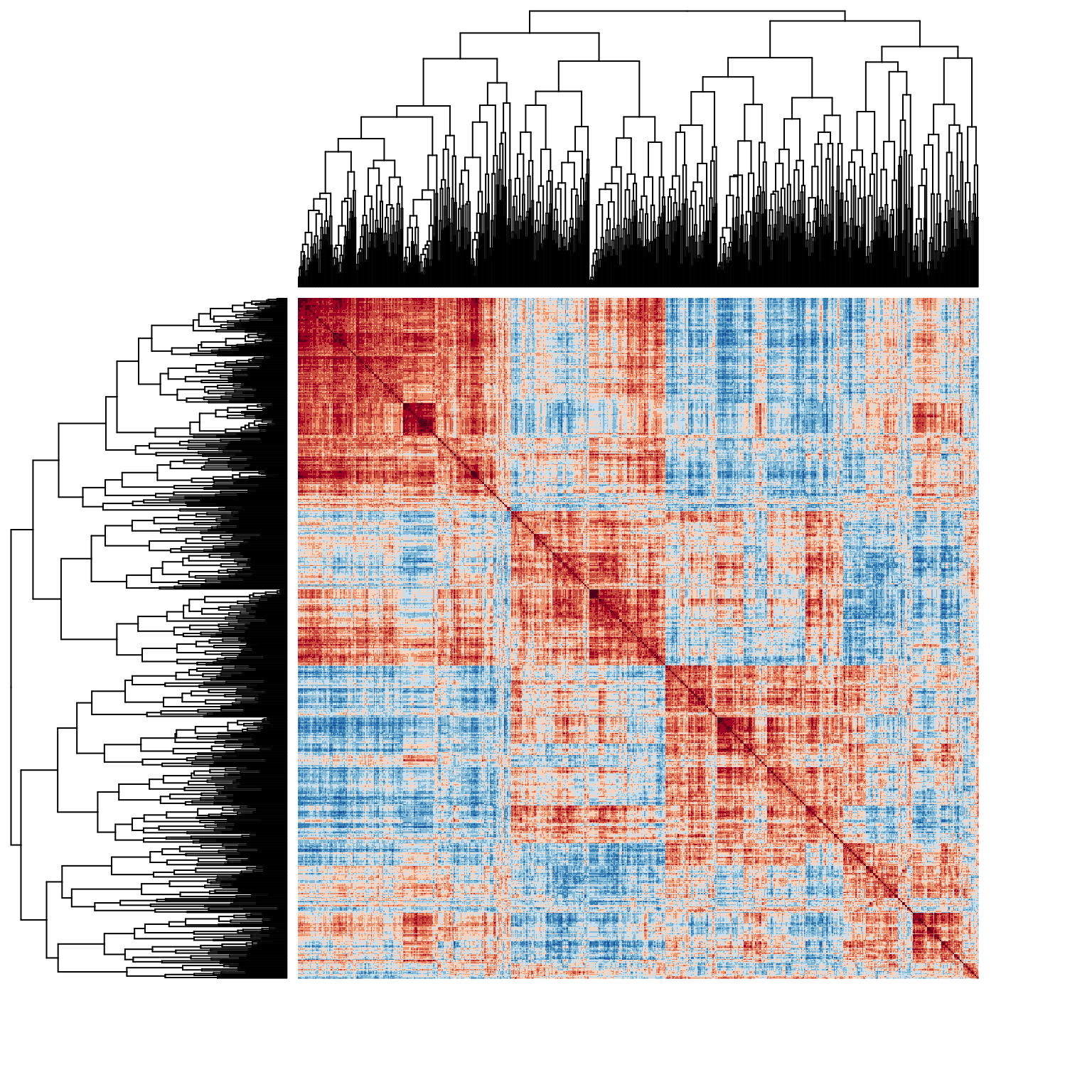
The aim: high-quality, re-usable, open datasets, with many measures answered by the same people, so how far they overlap can be seen.

A clustered correlation matrix of the items, red and blue blocks along the diagonal

For the participantReasons to keep going

  • Staged progress

    Levels, dressed as a dive: a depth gauge, landmarks passing, the seabed and the rock below.

  • Feedback

    Each level closes on a figure drawn from the answers just given: a body, a hill, a sea, a wheel.

  • Agency

    After the first level, participants pick which part of themselves to test next, from two or three cards.

  • Collection

    Each level mints a badge onto a shelf, and a whole-run profile fills in as the levels do.

For the dataAnswers worth keeping

  • Asking back

    Every reading can be agreed or disagreed with, every level rated: the Barnum effect, caught in the act.

  • Quiet quality control

    Attention checks, response times and an honesty question, recorded for every level and shown to nobody.

  • Nothing lost

    Answers are saved as they are given, and a run left partway picks up where it stopped.

  • Sharing

    Results go out as a link or an image that opens into the test: recruitment by word of mouth, filed as such.

Built to be changed: the questions are data rather than code, and each project asks its own levels from its own link.

Project: MINT follow-up

A project defines a list of mandatory, priority levels that every participant starts with, before the optional ones. The aim of this first project is to collect more data on the MINT and to validate a scale of attitudes to AI, the BAIT.

MINT

Multidimensional Interoceptive Traits questionnaire · Makowski et al.

How people sense the inside of their own body, as a trait.

BAIT

Beliefs about Artificial Intelligence Technology · Makowski et al.

What people believe AI can make, and how they feel about it.

Core · levels 1–4, every participant

Optional · levels 5–9, the participant's choice

Content

Level Questionnaire Dimensions Items

MINT

Multidimensional Interoceptive Traits questionnaire · Makowski et al.

Where it comes from

Its first validation (ER/MB2021/2, two studies) established its structure and how it relates to other interoceptive scales. With the two later studies that asked it too, 1,684 people are its norms.

In this study

  1. Replication of structure on a new, larger sample with the same design, and its convergent and discriminant validity against the measures around it.
  2. Effect of response format. Each run is dealt one of three formats at random, all scored 0 to 6, to see whether the numbers on a scale change how it is answered.
  3. Correlates with HiTOP, the Hierarchical Taxonomy of Psychopathology, which describes mental ill health as dimensions rather than diagnoses: to assess the relationship between interoception and psychopathology within that framing.
The three formats, as a participant meets them

I can notice even very subtle changes in my breathing

0 to 6 Disagree Agree
−3 to +3 Disagree Agree
No numbers Disagree Agree

BAIT

Beliefs about Artificial Intelligence Technology · Makowski et al.

Where it started

As a trait measure that could partly modulate and mediate the anti-AI bias the lab measures in its tasks, drawing on two things:

Expectations about what AI can produce Current AI algorithms can generate very realistic videos
Attitudes, items carried over from the GAAIS Much of society will benefit from a future full of AI

partly modulates and mediates

Anti-AI bias in the lab's tasks: the same image judged less favourably once it is believed to be made by AI

Where it is going

Its psychometric properties have not been ideal, and more work is needed to make it a better measure.

  1. Sharper expectations. Improve the sensitivity of what it measures about what AI can produce, across modalities: images, text, art and more.
  2. Subjective discriminability. Explore a separate factor for how well people think they can tell AI's work from a person's. Four such items are asked already, and not yet scored.
  3. Usage, taken further. Extend it to AI addiction and "AI psychosis": the bond with a chatbot and the spiral the reports describe.

HiTOP

Hierarchical Taxonomy of Psychopathology · Kotov et al., 2017

What it is

A classification of mental ill health built from how symptoms go together rather than from diagnostic categories. Problems sit on spectra that everybody falls somewhere along, arranged in a hierarchy from one general factor down to single symptoms.

The HiTOP model · ColinFreilich, CC BY-SA 4.0, via Wikimedia Commons · press to enlarge

The short measure

The HiTOP-BR (Brief Report; Simms et al., 2026): 45 statements about the last twelve months, on four points from "Not at all" to "A lot", none reversed, scored as the mean of each of six spectra. Its norms are the development sample's (N = 780), through the {hitop} R package, which also scores a saved file directly.

The six spectra of the HiTOP-BR · point at one

General factor (p) 12 items across the spectra

Externalizing 10 items

Internal­izing8 items Shown as Emotional IntensityMy moods were intense and unpredictable
Somato­form8 items Shown as Bodily ComplaintsI felt something was wrong with my body
Thought Disorder6 items Shown as Unusual ExperiencesMy fantasies felt very real to me
Detach­ment5 items Shown as SolitudeI was happiest when I was alone
Disinhib­ition9 items Shown as ImpulsivityI had trouble planning and keeping to schedules
Antagon­ism9 items Shown as DominanceI deserved special treatment

The two scales over the spectra are scored at analysis time.

Feedback expectations

What piloting the test should send back, and at what grain: excerpts of three pilots' notes on an earlier version, all addressed since.

Pilot 1Line by line: wording, punctuation, layout

Pilot 2Level by level, with how long each took

Pilot 3On a phone and a laptop

PositivesWhat worked, so that it is kept

Very cool user experience - definitely engaging!

I liked the hill metaphor and the overall use of images throughout the test to help understand and visualise the results

Compared to a normal test, it actually made me want to keep going and see what the next level was

NegativesWhat confused, broke or got in the way

For PHQ-4 section, the visual format of the question items is different to that in previous sections (although, may be intentional)

I get through hard times by finding what is funny in them. … what or who is them? No text above the question either.

Sometimes when I tried to tap on a specific number, it wouldn’t select the number I was actually pressing … I tried to select 40 but it would sometimes go to 47

Things to fixWhere it is, what it says, what it should say

contains → contain on first paragraph line Now, how have you been lately. requires a question mark rather than a full stop

maybe add PMDD in the what are you diagnosed with question especially if you're tracking mood

the Disagree and Agree labels were in the middle of the scale, underneath around 2 and 4, rather than at the ends underneath 0 and 6

Subjective reactionsHow it felt: the effort, the time, whether it rang true

On the glosses in brackets: I feel it comes across as a bit overwhelming

This level was a little hard so I didn't put lots of effort to answer the questions properly towards the end

I think it looks a bit nicer on the laptop, but it was still really good on the phone

Say which device and browser, name the level, and quote the words on screen: a note that can be found is a note that can be fixed.